Daddy's Future Gaming Buddy: A Designer's Review
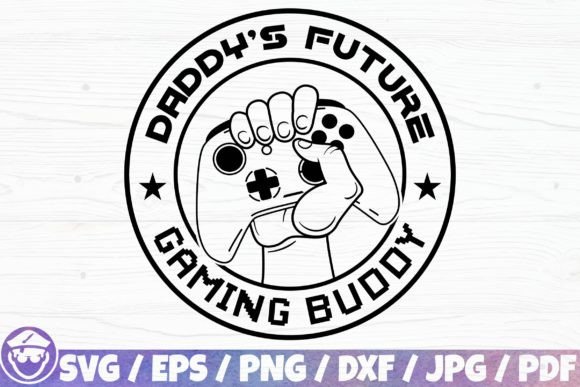
When I first pulled up the Daddy's Future Gaming Buddy file on my screen, I wasn't just looking at a cute graphic; I was immediately scanning for stitchability. As someone who spends hours hooping fabric and trimming jump stitches, my first impression of any digital embroidery file is practical. Does this look good on paper, or will it puckers the moment the needle hits the cloth? This design, categorized under Crafts and Graphics, brings a specific mood to the table. It feels modern, slightly playful, and perfectly suited for the current wave of "gamer dad" culture that is exploding in the nursery and kids' apparel market.
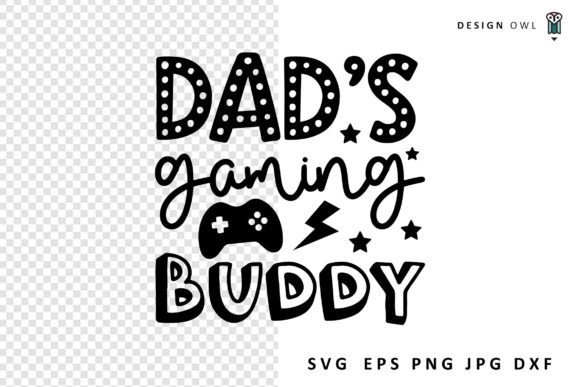
The visual personality of Daddy's Future Gaming Buddy suggests a layout that balances text with iconography. In a real-world scenario, I imagined this immediately on a heather grey sweatshirt. The theme implies a connection between generations, specifically father and child, bonded over video games. For an Etsy seller or a small shop product creator, this is gold. It taps into a niche that is personal yet broadly recognizable. However, before committing to a full production run, we need to talk about how this translates from a vector or raster image into actual thread.
Real-World Application: The Sweatshirt Test
Let's walk through a specific project. Imagine a customer orders a custom gift for a baby shower. They want something unique, not just another "Baby Boy" onesie. You decide to use Daddy's Future Gaming Buddy on a high-quality, medium-weight fleece sweatshirt. This is where your judgment as a designer comes into play.
Because the download includes SVG, DXF, PDF, PNG, JPG, and EPS files, you have flexibility. If you are using a cutting machine like Silhouette Studio or Cricut to create an appliqué template, the SVG and DXF files are your best friends. An applique design approach might be smarter here than a full density fill if the original graphic has large solid areas. By using fabric for the main shapes and only embroidering the outlines or key details with a satin stitch or running stitch, you reduce the stiffness of the finished product. This is crucial for baby items where comfort is paramount.
If you choose to stitch it directly as a machine embroidery design, pay close attention to the stitch density. Gaming-themed graphics often involve sharp angles and geometric shapes. If the digitizing is too dense, the fabric will pull, especially on stretchy materials like jersey knits used for t-shirts. I always recommend testing the design on scrap fabric of the same weight and texture before touching the final garment. Check how the thread colors contrast against the background. A dark navy thread on a black sweatshirt might look sleek in a mockup but disappear entirely once stitched.
Navigating Fabric Textures and Hoop Constraints
One of the biggest challenges with themed graphics is adapting them to different surfaces. While Daddy's Future Gaming Buddy looks fantastic flat on a tote bag or a pillow cover, curved surfaces present a different beast. If a client wants this on a dad cap, you must consider the hoop size limitations and the curvature of the brim area. Detailed corners and small lettering can get lost or distorted on a curved surface if the design isn't scaled correctly.
Furthermore, consider the fabric texture. A linen tea towel offers a crisp, clean look that highlights the precision of the stitching, making it a great option for a kitchen-themed gift. However, textured fabrics like waffle weave or heavy canvas can interfere with fine details. If the design relies on tiny elements to convey the "gaming" aspect—like small controllers or pixelated fonts—these might get swallowed by the fabric's weave. In such cases, increasing the size of the embroidery or simplifying the element count is a necessary adjustment to maintain clarity.
For products that require frequent washing, such as custom apparel or baby embroidery projects, durability is key. Ensure you are using the correct stabilizer. A cut-away stabilizer is often safer for stretchy fabrics to prevent the design from warping after multiple wash cycles, whereas a tear-away might suffice for stable woven fabrics like those used in aprons or wall hangings.
Commercial Viability and Brand Consistency
For craft business owners and creative entrepreneurs, the value of a design isn't just in how cute it is; it's in how it elevates your brand. Using Daddy's Future Gaming Buddy consistently across your printable mockup listings and physical inventory can help build recognition. When customers see a well-executed version of this design, they associate that quality with your shop.
Visual appeal drives buyer engagement. A clean, well-stitched design signals professionalism. If the edges are frayed or the registration is off, it undermines trust. This is why reviewing the embroidery file details before purchase or use is vital. Since the provided information lists compatibility with Silhouette Studio and Cricut, it leans heavily towards cut-file applications, but many users adapt these for embroidery. If you are planning a commercial embroidery project, verify the licensing terms explicitly. Just because a file is available for download doesn't automatically grant unlimited commercial rights for physical goods versus digital resale.
Consider the versatility of the asset. Beyond clothing, this graphic could work beautifully on an embroidered patch. Patches are trending, and they allow the customer to apply the design to jackets, bags, or hats without you needing to stock multiple garment sizes. This expands your design assets library and opens up new revenue streams for your handmade product line.
Final Thoughts on Execution
In conclusion, Daddy's Future Gaming Buddy holds strong potential for creating memorable personalized gifts and boutique items. Its strength lies in its thematic relevance and emotional connection. However, its success depends entirely on execution. Do not skip the step of testing on scrap material. Evaluate whether a full fill stitch is necessary or if a combination of satin and running stitches would yield a softer hand feel.
Always compare your results on both light and dark fabric backgrounds. What pops on white might vanish on charcoal. And remember, while the file formats provided (SVG, DXF, etc.) are excellent for cutting machines, if you are sending this to a multi-needle embroidery machine, ensure you have the appropriate converted embroidery format (like PES, DST, or XXX) from a trusted digitizer if the source files are not native embroidery formats.
By approaching this design with a critical eye for detail, fabric compatibility, and end-use durability, you can turn a simple graphic into a standout piece of holiday embroidery or a year-round bestseller. Whether it ends up on a tote bag design for a gaming convention or a soft blanket for a newborn, the care you put into the stitching process is what ultimately defines the quality of your work.